The Annex ‘G’ ‘Water Safety / Rescue Awareness’, one-day course run by Birmingham & Midland Marine Services, complies with the Annex ‘G’ syllabus requirements of the DEFRA ‘Flood Rescue Concept of Operations’ scheme (December 2025 revision) at DEFRA Annex G – Water and flood non-rescue support operations training module.
Note: Annex ‘H’ was superceded by Annex ‘G’ in December 2025.
It is both undertaken by the Environment Agency and approved for their contractors, sub-contractors and third-party works personnel.
Covering ‘open water’, ‘still water’, ‘rivers’, ‘lifejacket-user’, ‘co-worker rescues’ amongst other highly practical skills for personnel working on, near or above the water.
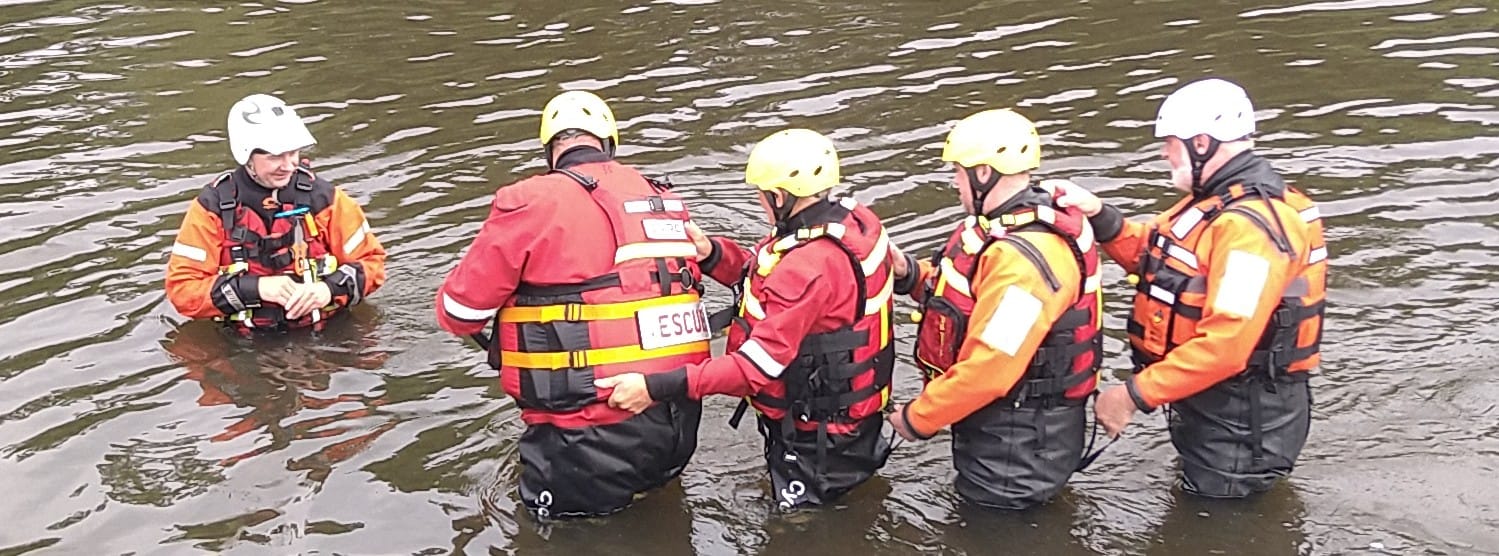
Candidates can expect a mix of classroom and shore-based theory and practical training followed by an afternoon in the river in full aquatic PPE to emergency services standard. (Buoyancy Aids rather than Lifejackets in the river – Lifejacket deployment is a bolt-on, please contact us for details)
Our water safety & rescue courses are HSE, CDM Regulations 2015 and DEFRA compliant.
‘Annex G’ training is the benchmark one day water safety / rescue training for EA / non 999 personnel and unlike a standard DEFRA Module 1) course that lasts for one year, the Annex ‘G’ qualification has a period of three years before expiry. CPD must be maintained to keep the qualification current. Please contact us for further information.
Full aquatic PPE can be hired if required.
This course also ticks the boxes for ‘blue-light’ agencies, both full-time, part-time, and of course the voluntary sector such as Search & Rescue and Mountain Rescue Teams.
Aim
To enable students to understand the issues and hazards associated in working on, near and in water and to undertake a suitable rescue response from the bank. Annex G – Water and flood non-rescue support operations.
Annex ‘G’ Syllabus – Courses can be tailored to your working practices & environment.
Learning outcomes
- Demonstrate water rescue scene management and dynamic assessment of risk: understand the limitations of the water rescue wading responder capability; rescue team organisation; communication systems: hand, audible and radio; hazard recognition and preplanning; risk and incident zones; incident management structure; team roles and responsibilities
- Identify and apply the role of the water & flood non-rescue support operations training module within the Incident Management Structure: incident management structure; team health, safety and welfare.
- Apply a working knowledge of hydrology and associated hazards: recognition of water features and their impact
- Identify and use appropriate PPE: types of PPE; donning and doffing; care maintenance and inspection; record keeping. This can include life jacket or use of personal flotation device (PFD)
- Demonstrate self-rescue from water
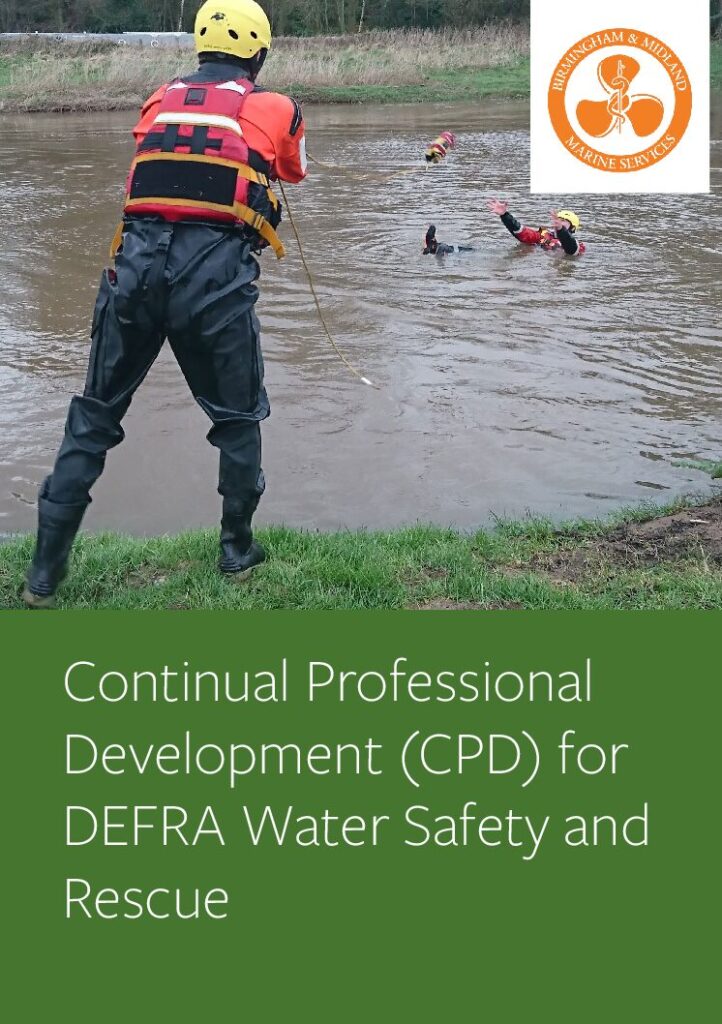
- Understand relevant rescue techniques in the role as casualty: talk, receive reach pole, and throw line.
- Demonstrate techniques for movement in shallow water: supported crossing (poles), 1-2-3 person teams; wedge and line astern.
- Identify and explain the additional hazards and difficulties associated with working in darkness and reduced visibility, and application of suitable control measures: equipment issues; lighting; additional marking requirements; audible signals.
- Flood: awareness of flooding and associated hazards; pollution; location and incident specific hazards; topography